Afbeelding
english below
Filmgeschiedenis vertelt het verhaal van films die constant verder bouwen op elkaar. Als één hedendaagse regisseur dat weet, is het wel Paul Thomas Anderson, PTA voor professionele doeleinden. In PTA & HIS MASTERS kijken we naar de officieuze filmische voorouders van Paul Thomas Anderson. We plaatsen de regisseur – een van de grootste Amerikaanse regisseurs van zijn generatie – naast de invloeden die hij ongegeneerd citeert in zijn werk. In PTA & HIS MASTERS linken we THE MASTER aan John Hustons LET THERE BE LIGHT.
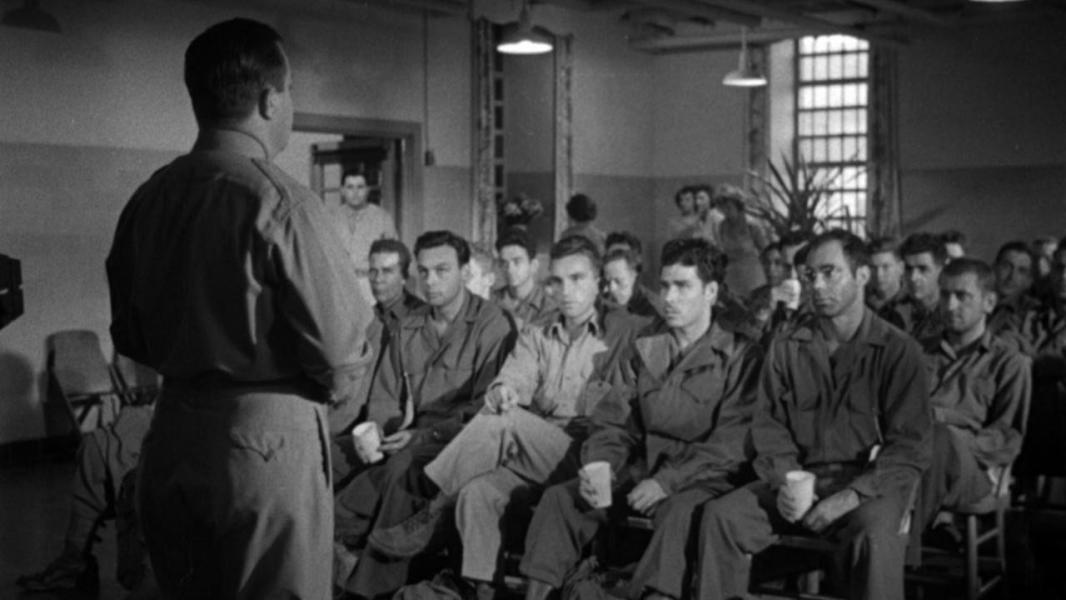
Tijdens zijn dienstplicht in het Amerikaanse leger maakte Hollywoodregisseur John Huston drie documentaires voor de overheid: REPORT FROM THE ALEUTIANS (1943) over soldaten die zich klaarmaken voor de strijd, THE BATTLE OF SAN PIETRO (1945) over een mislukte aanval die vele doden eiste en LET THERE BE LIGHT (1946) over getraumatiseerde veteranen. Voor deze laatste film volgde Huston patiënten in een militair psychiatrische ziekenhuis kort na het einde van WOII. De film toont de mentale oorlogsslachtoffers die lijden aan PTSS en andere neurologische aandoeningen. Huston toont heel openlijk hun symptomen, hoe ze omgaan met deze symptomen en hoe deze behandeld worden.
De film begint met een introductie die verklaart dat 20 percent van oorlogsslachtoffers een psychiatrische oorzaak hebben. Wat volgt, is een verslag van een groep veteranen die verschillende psychiatrische behandelingen ondergaan over een periode van twee maanden. De kijker wordt getuige van de schade die oorlog berokkent, niet enkel uiterlijk fysiek of in termen van stedelijke ruïnes, maar ook de verwoesting van de geest van ontelbare soldaten.
Tijdens de productie van LET THERE BE LIGHT werd PTSS niet erkend als een aandoening en door de onverbloemde weergave van de psychologische oorlogsgruwelen hield de Amerikaanse overheid de release van de film tientallen jaren tegen. Wat in die periode wel werd bewerkstelligd, was een wettelijk kader voor psychologisch leed. In 1946 werd de U.S. Mental Health Act goedgekeurd en ondertekend door president Truman, waarin geestelijke gezondheid eindelijk werd gedestigmatiseerd, wat leidde tot onderzoek, diagnose en behandeling.
Voor zijn zesde film langspeelfilm THE MASTER bestudeerde PTA Hustons documentaire grondig om zijn weergave van een teruggekeerde, getraumatiseerde veteraan zo waarachtig mogelijk weer te geven. PTA deed dit niet enkel om zijn personages respectvol en waarheidsgetrouw te benaderen maar ook om zijn vader te eren, een oorlogsveteraan die getekend terugkwam van de oorlog, maar deze trauma’s niet onder ogen wilde zien. Voor PTA was de documentaire zo belangrijk als tegenhanger bij zijn film dat hij LET THERE BE LIGHT opnam als special feature op de Blu-ray van THE MASTER.
ENG
The film is in English without subtitles
Film history is the story of films constantly building on one another. If one contemporary director knows this, it’s Paul Thomas Anderson, PTA for professional purposes. In PTA & HIS MASTERS we take a look at the unofficial filmic predecessors of Paul Thomas Anderson. We place the director – arguably one of the most important directors of his generation – next to the influences he unabashedly cites in his work. In PTA & HIS MASTERS we link THE MASTER to John Huston’s LET THERE BE LIGHT.
During his service in the US Army, Hollywood director John Huston shot three documentaries for the government: REPORT FROM THE ALEUTIANS (1943) about soldiers getting ready for battle, THE BATTLE OF SAN PIETRO (1945) about a failed attack that resulted in many casualties and LET THERE BE LIGHT (1946) about traumatised veterans. For this last film, Huston followed patients in a military psychiatric hospital shortly after the end of WOII. The documentary shows the mental war victims suffering from PTSD and other neurological conditions. Huston candidly captures their symptoms, how they deal with these symptoms and how they are treated.
The film starts with an introduction that states that 20 percent of the war casualties are of a psychiatric nature. What follows, is an account of a group of veterans who are undergoing several psychiatric treatments over a period of two months. The audience is witness to the damage caused by war, not only physical or in terms of urban ruins, but in terms of devastating the minds of numerous soldiers.
During the production of LET THERE BE LIGHT, PTSD was not recognised as a condition and because of the unvarnished representation of the psychological horrors of war the American government halted the release of the film for decades. However what did get secured in that period was a legal framework for psychological suffering. In 1946 the U.S. Mental Health Act was approved and signed by president Truman, where mental health was finally destigmatized, which led to research, diagnosis and treatment.
For his sixth feature film THE MASTER, PTA studied Huston’s documentary extensively in order to depict the character of a returned, traumatized veteran as truthfully as possible. PTA did not only do this to approach his characters with as much respect as possible, but also to honour his father, a WOII veteran who returned from war scarred but did not want to face these traumas. For PTA the documentary was so important as a companion piece that he added LET THERE BE LIGHT as a special feature on the Blu-ray of THE MASTER.