Afbeelding
english below
Filmgeschiedenis vertelt het verhaal van films die constant verder bouwen op elkaar. Als één hedendaagse regisseur dat weet, is het wel Paul Thomas Anderson, PTA voor professionele doeleinden. In PTA & HIS MASTERS kijken we naar de officieuze filmische voorouders van Paul Thomas Anderson. We plaatsen de regisseur – een van de grootste Amerikaanse regisseurs van zijn generatie – naast de invloeden die hij ongegeneerd citeert in zijn werk. In PTA & HIS MASTERS linken we PHANTOM THREAD aan Alfred Hitchcocks REBECCA.
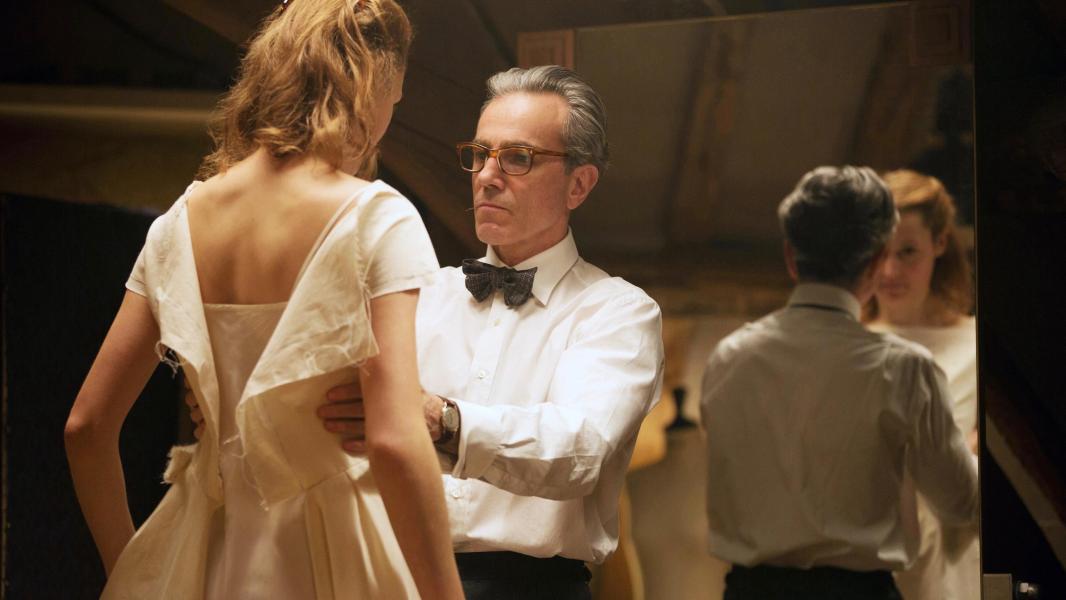
In het naoorlogse Londen ontwerpt de beroemde couturier Reynolds Woodcock haute-couturekledij voor de Londense jetset en de leden van het koninklijk huis. Reynolds wordt bijgestaan door zijn zus Cyril die de zakelijke kant van zijn werk op zich neemt. De couturier is obsessief bezig met zijn vak en beschouwt zijn ontwerpen stuk voor stuk als kunstwerken. Vrouwen treden kortstondig het leven van de notoir alleenstaande kleermaker binnen als muzen voor inspiratie, maar niets meer. Tot hij op een dag Alma ontmoet. De jonge, wilskrachtige vrouw zet al snel zijn strak geregisseerde en geplande leven op z’n kop.
De rol van Woodcock werd vertolkt door method acteur Daniel Day-Lewis, die voor zijn performance een 6de Oscarnominatie ontving. Day-Lewis kondigde bij de release aan dat hij zou stoppen met acteren en deed dit ook zeven jaar lang, tot zijn terugkeer in de film ANEMONE, geregisseerd door zijn zoon Ronan Day-Lewis. Tijdens zijn voorbereidingen voor de rol bekeek Day-Lewis archiefbeelden van modeshows uit de jaren '40 en '50, bestudeerde beroemde designers en sprak met de curator van de mode- en textielafdeling van het Victoria and Albert Museum in Londen. Hij ging in de leer bij Marc Happel, hoofd van de kostuumafdeling bij het New York City Ballet en leerde daar zelf te naaien en patronen te tekenen. Het personage van Reynolds Woodcock baseerde PTA op Spaans designer Cristóbal Balenciaga en de relatie tussen zijn bijna monastieke leven en uitbundige werk.
PTA regisseerde niet enkel, maar deed ook de cinematografie van PHANTOM THREAD en kiest voor een hele intieme verbeelding van Reynolds’ wereld. Jonny Greenwood (van Radiohead faam) werkte opnieuw samen met PTA aan de soundtrack, die hij daarvoor ook al componeerde voor THERE WILL BE BLOOD, THE MASTER en INHERENT VICE en nadien voor ONE BATTLE AFTER ANOTHER. Op de tonen van piano en strijkers ontvouwen de personages zich, van de toxische egoïstische Reynolds tot de loyale zus en ontembare muze. “I have to love him my own way” klonk nooit zo dreigend.
Voor PHANTOM THREAD keek PTA naar de stijl van gothische klassieke cinema, zoals Alfred Hitchcock’s psychologische thriller REBECCA (1940). Van narratieve thema’s zoals gedoemde liefde en afstandelijke, dominante echtgenoten tot de gothische atmosfeer die de beelden sluiert. Maar op een belangrijk punt verzet PTA zich tegen de Master of Suspense. “I love Hitchcock’s REBECCA so much, but I watch it and about halfway through, I always find myself wishing that Joan Fontaine would just say, ‘Right, I have had enough of your shit.’” Maar toch blijft ze het gedrag van haar man pikken. PTA geeft zijn rebelse heldin de daadkracht die hij Joan Fontaine toewenste. Maar waarom blijft Fontaine – wier personage in de film zelfs geen eigen naam krijgt buiten die van haar man – bij haar kille echtgenoot? Ze zijn volgens PTA diepgaand verbonden en dat idee intrigeerde hem genoeg om PHANTOM THREAD te maken. De plot van PHANTOM THREAD draait rond de complexe connectie tussen Alma en Reynolds, de muze en de maker, en hun relatie is zo ambigu dat je niet echt weet voor wie je nu moet supporteren. PTA’s visie blijft eigenwijs en uniek, maar in ware Hitchcock stijl verschijnt de meester met REBECCA als cameo duidelijk ook in PHANTOM THREAD.
ENG
The film is in English with Dutch subtitles
Film history is the story of films constantly building on one another. If one contemporary director knows this, it’s Paul Thomas Anderson, PTA for professional purposes. In PTA & HIS MASTERS we take a look at the unofficial filmic predecessors of Paul Thomas Anderson. We place the director – arguably one of the most important directors of his generation – next to the influences he unabashedly cites in his work. In PTA & HIS MASTERS we link PHANTOM THREAD to Alfred Hitchcock’s REBECCA.
In post-war London, the famous couturier Reynolds Woodcock designs haute-couture clothing for the London high society and members of the royal family. Reynolds is supported by his sister Cyril, who manages the business side of things. The couturier is obsessive about his work and considers each of his designs artworks. Women only enter the notorious bachelor’s life for a short while as muses for inspiration, but nothing more. Until one day, he meets Alma. The young, strong-willed woman quickly turns his strictly organised life upside down.
The character of Woodcock is played by method actor Daniel Day-Lewis, who received his 6th Oscar nomination for his performance. After the release of PHANTOM THREAD, the actor announced his retirement from acting. And he did retire for seven years, before he would return in 2025 in the film ANEMONE directed by his son Ronan Day-Lewis. In preparation for the film, Day-Lewis watched archival footage of 1940s and 1950s fashion shows, studied famous designers, consulted with the curator of fashion and textiles at the Victoria and Albert Museum in London, and apprenticed under Marc Happel, head of the costume department at the New York City Ballet. He also learned how to sew, and to make patterns. The character of Reynolds Woodcock was based on Spanish designer Cristóbal Balenciaga and the relationship between his almost monastic life and lavish work.
PTA did not only direct the film but also worked as cinematographer on PHANTOM THREAD. He opted for a very intimate imagination of Reynolds’ world. Jonny Greenwood (of Radiohead fame) worked with PTA on the soundtrack again, after they had previously worked together on THERE WILL BE BLOOD, THE MASTER and INHERENT VICE and afterwards would join forces again for ONE BATTLE AFTER ANOTHER. Set to the tones of Greenwood’s billowing piano and strings score, the characters unfold, from the toxic egotistic Reynolds to the loyal sister and indomitable muse. “I have to love him my own way” never sounded so threatening.
For PHANTOM THREAD PTA looked at the style of Gothic classic cinema, like Alfred Hitchcock’s psychological thriller REBECCA (1940). From narrative themes like doomed love and distant and domineering husbands to the Gothic atmosphere that shrouds the images. But PTA breaks with the Master of Suspense on an important level. “I love Hitchcock’s REBECCA so much, but I watch it and about halfway through, I always find myself wishing that Joan Fontaine would just say, ‘Right, I have had enough of your shit.’” But still she continues to put up with her husband’s behaviour. PTA gives his rebellious heroine the agency he wished for Joan Fontaine. But why does Fontaine – whose character isn’t even given a name except for her husband’s – stay with her cold husband? According to PTA the two of them are connected in a profound way and that idea intrigued him enough to make PHANTOM THREAD. The plot of PHANTOM THREAD revolves around the complex connection between Alma and Reynolds, the muse and the maker, and their relationship is so ambiguous that you really don’t know who to root for. PTA’s vision remains his own and unique, but in true Hitchcock fashion the director does make a cameo in PHANTOM THREAD through his REBECCA.